
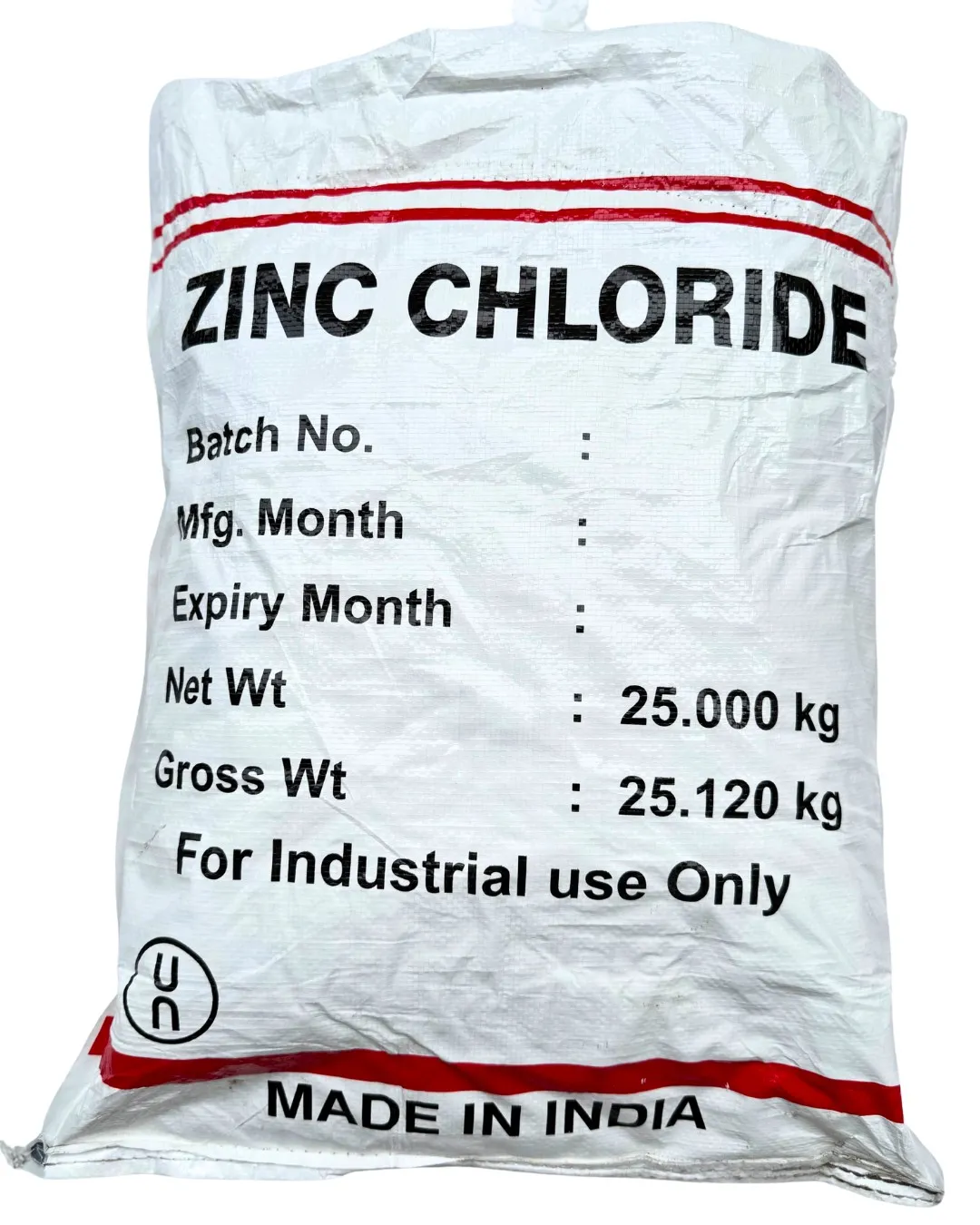
Zinc Chloride is a highly versatile, white crystalline, and hygroscopic inorganic compound with significant industrial importance. It is highly soluble in water, forming acidic solutions, and is valued for its corrosive, fluxing, preservative, and catalytic properties across a diverse range of industries from metallurgy to wood treatment and chemical synthesis.
Key Characteristics & Benefits:
-
Powerful Flux in Soldering & Welding: Its primary use is as a highly effective flux to clean metal surfaces by dissolving oxides, ensuring strong, clean joints in soldering (especially for galvanized iron) and hot-dip galvanizing.
-
Wood Preservative & Fire Retardant: Used in solutions to treat timber, providing protection against rot, fungi, and insects, while also acting as a fire retardant.
-
Catalyst & Chemical Reagent: Serves as a catalyst in organic synthesis (e.g., Fischer indole synthesis) and as a dehydrating agent in chemical manufacturing.
-
Electroplating & Metal Finishing: An essential component in electrolyte baths for electroplating zinc and other metals.
-
Deodorant & Disinfectant Properties: Used in dilute solutions for its antiseptic and astringent qualities, historically in embalming and certain disinfectants.
